

If you’re moving goods in or out of the UK, you already know how central customs clearance is to keeping everything flowing. Containers don’t just roll off a vessel or through the Channel without paperwork being scrutinised. And when a customs declaration isn’t right, the knock-on effects can be immediate and expensive.
I’ve spoken to logistics managers who only realised something was wrong when a shipment was suddenly held at port with no warning. What usually starts as a small admin oversight can quickly become a full HMRC enquiry. So let’s look at what happens if goods aren’t declared properly, and why getting it right first time matters.
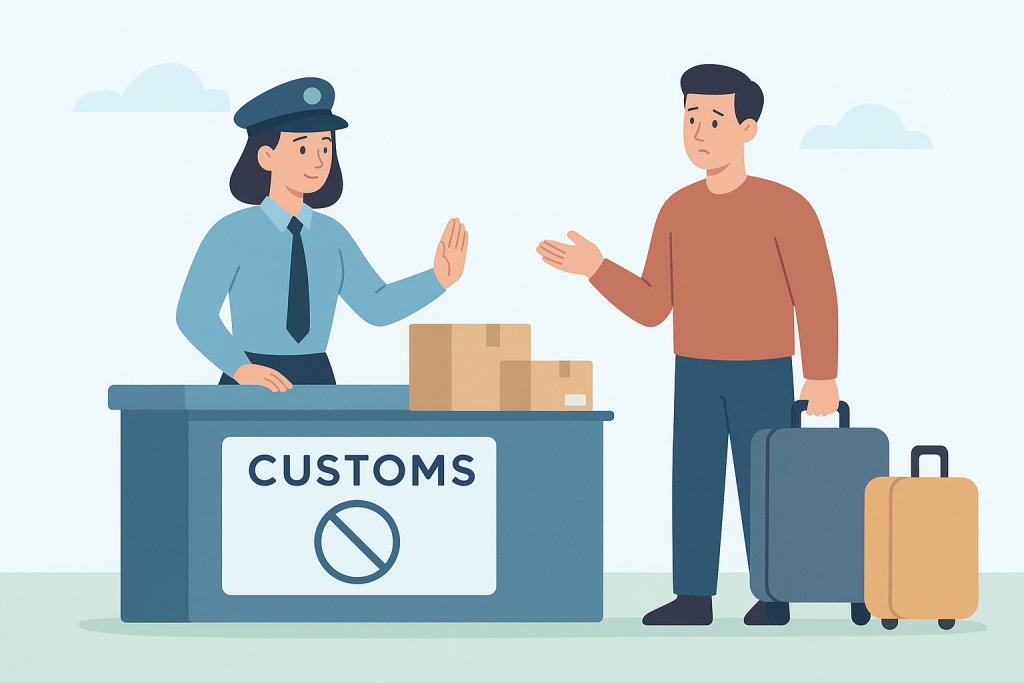
What does it mean to declare goods properly?
A proper customs declaration is more than just listing what’s in the box. It’s a legal declaration to HMRC confirming the nature, value and origin of the goods being imported or exported.
To meet UK customs procedures, you need to ensure:
- The correct description of goods is provided.
- The correct commodity code is used.
- The customs value is accurate and supported by documentation.
- Preference claims are valid and evidenced.
- Any licences or certificates are included if required.
This forms the basis of your import export compliance. Once submitted, you are legally responsible for the accuracy of that information, even if a third party has input the data on your behalf.
Common mistakes in customs declarations
Most issues are not deliberate. They tend to come from rushed admin, misunderstood tariff codes or outdated information. But HMRC does not treat inaccuracy lightly.
Incorrect commodity code
Using an incorrect commodity code is one of the most common problems. Codes determine duty rates and control requirements. A slight misclassification can mean you’ve underpaid duty, or applied the wrong controls entirely.
Undervaluation
Declaring a lower customs value, whether by mistake or to reduce duty, is treated seriously. This includes failing to add assists, freight costs or tooling charges where required.
Missing or incomplete paperwork
Incorrect invoices, missing proof of origin or absent licences can invalidate a customs declaration. Something as small as a mismatched company address can trigger queries.
Misclassification and undeclared goods
Sometimes goods are included in a consignment but not listed on the declaration at all. Undeclared goods, even if low in value, can lead to seizure.
These mistakes often happen when businesses expand into new markets or product lines and assume existing processes still apply.
Financial penalties and fines from HMRC
HMRC penalties are calculated based on the behaviour behind the error. Was it careless, deliberate or concealed? The category makes a big difference.
Customs fines UK businesses face can include:
- Repayment of underpaid duty and VAT.
- Financial penalties based on a percentage of unpaid revenue.
- Civil penalties for inaccurate declarations.
- Interest on outstanding amounts.
For a single shipment the figure might be manageable. But if HMRC reviews historic entries and finds repeated errors, liabilities can stretch back years. I’ve seen cases where a classification error across multiple consignments resulted in five-figure repayments.
Delays, inspections and seized goods at UK ports
Financial penalties are only part of the picture. Delays at port can be just as damaging.
When a declaration raises concern, HMRC may order a documentary check or physical inspection. Containers can be held for days, sometimes longer during peak periods. Storage and demurrage charges quickly add up.
Where serious discrepancies are identified, goods may be seized. Recovering seized goods is costly and not always successful. For time-sensitive shipments such as retail stock or production components, the commercial impact can far outweigh the duty itself.
Impact on your supply chain and reputation
Repeated declaration errors can trigger increased scrutiny from HMRC. Your consignments may be flagged for regular checks, which slows everything down.
From a supply chain perspective, unpredictability is the real problem. If an inbound container of parts is delayed, production schedules shift. If finished goods miss a retail window, revenue is lost.
There is also reputational risk. International suppliers and customers expect professional handling of UK customs procedures. Ongoing compliance issues can damage trading relationships, particularly where contracts include delivery time guarantees.
Can undeclared goods lead to criminal prosecution?
In serious cases, yes.
If HMRC believes undeclared goods were concealed deliberately or if there is evidence of fraud, criminal investigation is possible. This can lead to prosecution, unlimited fines and even imprisonment in extreme cases.
Most businesses never reach this stage. However, it underlines why customs declarations must never be treated as routine admin. They are legal submissions with significant consequences.
How to correct a customs declaration error
If you discover an error, act quickly. Voluntary disclosure is viewed far more favourably than waiting for HMRC to uncover the issue.
The correction process will depend on the type of error and when it is identified. It may involve:
- Submitting an amendment for recent entries.
- Making a post-clearance adjustment.
- Notifying HMRC through a formal disclosure process.
Keeping clear internal records is essential. If HMRC asks how the mistake occurred and what you’ve done to prevent recurrence, you will need a credible answer backed by evidence.
How a freight forwarding and customs specialist can help
Even experienced logistics teams lean on specialist support for tricky classifications or new trade lanes. The rules around import export compliance change, commodity codes are updated and trade agreements evolve.
A knowledgeable partner providing freight forwarding services alongside customs input can:
- Review and verify commodity codes.
- Check valuation methods and origin claims.
- Ensure documentation aligns before goods reach port.
- Spot risk patterns in existing declaration data.
It is often during routine reviews that hidden risks come to light. A second set of experienced eyes can prevent small oversights turning into HMRC penalties later on.
For businesses moving goods regularly through busy gateways, that reassurance is invaluable.
Protecting your shipments through major UK ports
From Dover and Felixstowe to Harwich, Immingham and Killingholme, accurate declarations keep freight moving. The same applies at London Gateway, Portsmouth, Southampton and Tilbury where inspection capacity and port congestion can magnify small paperwork errors into serious disruption.
Getting declarations right is not about ticking a box. It protects your cash flow, your supply chain and your reputation. If you are unsure about your current processes or have concerns about previous entries, it makes sense to address them now rather than after a formal enquiry.
Working with an experienced partner such as MartinTrux gives you practical, hands-on support grounded in the realities of UK port operations. Contact MartinTrux for expert customs clearance and freight support