

When comparing DDP vs DAP, the key difference comes down to one question: who pays the customs duty and VAT on your shipment, the seller or the buyer? Getting this wrong can mean unexpected charges landing on your desk when goods arrive in the UK. Our customs duty support services can help you confirm exactly what you are responsible for before goods ship.
What Do DDP and DAP Mean?
DDP stands for Delivered Duty Paid, and DAP stands for Delivered at Place. Both are incoterms, standardised trade terms that define who is responsible for shipping costs, risk, and customs formalities at each stage of a shipment’s journey.
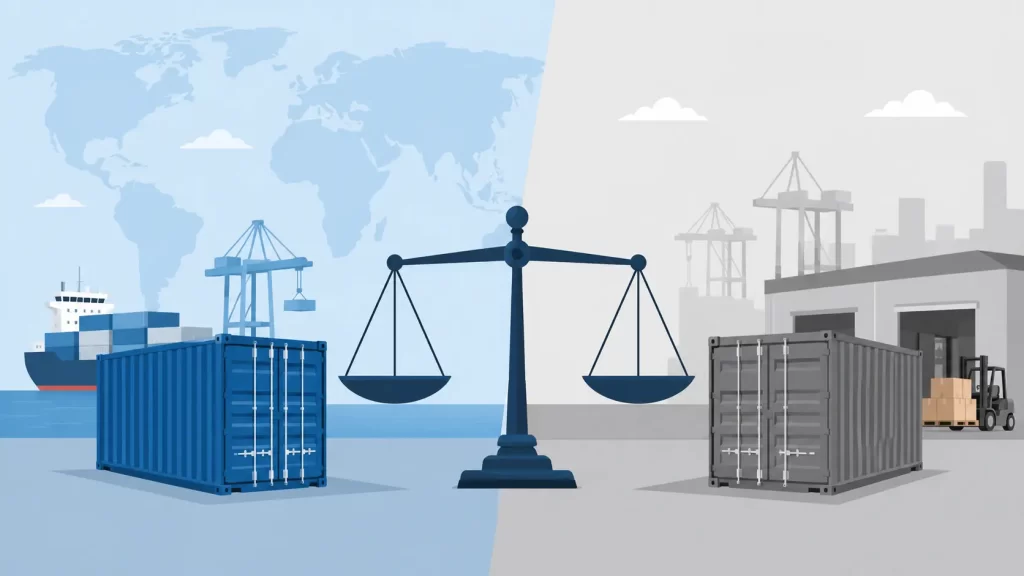
The core difference between the two sits at the border: DDP includes import duty and VAT in the seller’s responsibility, while DAP does not.
Who Pays Customs Duty Under DDP?
Under DDP, the seller is responsible for delivering goods to the agreed destination in the UK, including clearing customs, and paying any import duty and VAT that is due. The buyer receives the goods with nothing further to pay at the border.
This makes DDP attractive to buyers who want a fully hands-off experience, but it means the seller (or their appointed customs agent) needs to be registered and set up to handle UK import formalities correctly.
Who Pays Customs Duty Under DAP?
Under DAP, the seller delivers goods to the agreed location, but the buyer is responsible for import clearance, and for paying any customs duty and VAT due. The seller’s responsibility ends once goods arrive at the named place, before clearance has taken place.
This means the buyer needs to either handle customs clearance themselves or appoint a customs broker to manage the declaration and duty payment on their behalf.
DDP vs DAP: Key Differences at a Glance
- Who pays duty and VAT: Seller under DDP, buyer under DAP
- Who is the importer of record: Usually the seller under DDP, usually the buyer under DAP
- Buyer’s involvement in customs: Minimal under DDP, active under DAP
- Risk to the seller: Higher under DDP, since they carry responsibility for UK compliance
- Common use case: DDP suits sellers confident in UK customs processes; DAP suits buyers who want more visibility and control over clearance and duty costs
Which Should You Choose?
The right choice depends on how much control you want over customs clearance, and how confident the seller is in handling UK import requirements. Buyers who want cost certainty and no border surprises often prefer DDP. Buyers who want to manage their own customs relationships, or who are working with sea freight movements such as those covered by our sea freight services, may prefer DAP so they retain oversight of the clearance process.
It is worth confirming which terms are being used in writing before goods ship, rather than assuming.
Which Ports Does This Apply To?
DDP and DAP apply in the same way regardless of which UK port your goods enter through. MartinTrux handles customs clearance for shipments moving via ports including Dover and Portsmouth.
Frequently Asked Questions
Is DDP more expensive than DAP? Not necessarily. The total cost is often similar, but under DDP, duty and VAT are built into the price you agree with the seller, whereas under DAP they are billed separately once goods arrive.
Can a buyer refuse to pay duty under DAP if they weren’t expecting it? No. Under DAP, the buyer is contractually responsible for import duty and VAT, so this should be factored into the agreed price and budgeted for in advance.
Who should be named as the importer of record? This depends on the incoterm agreed. Under DDP it is typically the seller, and under DAP it is typically the buyer, though this should always be confirmed in writing.
How MartinTrux Can Help
MartinTrux has supported UK importers and exporters with customs clearance since 1982, with over 500 years of combined team experience across our Dover, Heathrow, and Manchester offices. We hold our own deferment account facility and are accredited by HMRC as an Authorised Economic Operator (AEO).
This article is intended as general guidance and not formal legal or contractual advice. If you are unsure who is responsible for duty on your shipment, get in touch with our team and we will help you clarify it.