

Incoterms UK importers rely on define exactly who is responsible for shipping costs, insurance, and customs formalities at each stage of a shipment’s journey. Getting the wrong incoterm on a contract can mean unexpected charges or confusion over who handles customs clearance. Our sea freight customs support team can help you choose and apply the right incoterm for your shipment.
What Is an Incoterm?
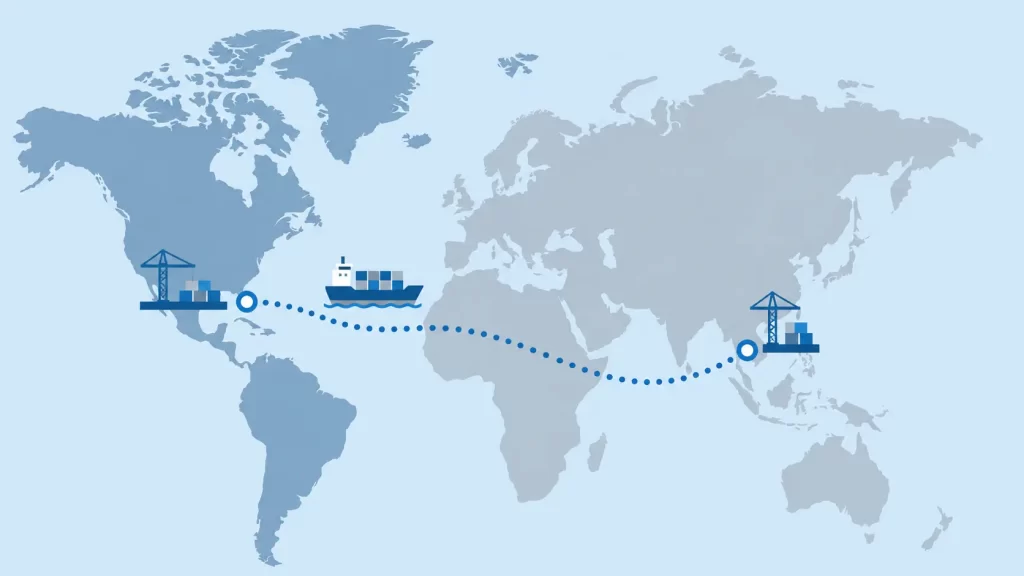
Incoterms, short for International Commercial Terms, are a set of standardised trade terms published by the International Chamber of Commerce. They define which party, buyer or seller, is responsible for costs, risk, and paperwork at each stage of moving goods from origin to destination.
Incoterms do not cover ownership of goods or payment terms; they specifically address logistics responsibility, insurance, and where risk transfers from seller to buyer.
Why Do Incoterms Matter for UK Importers?
The incoterm agreed in a sales contract determines who arranges transport, who pays for it, and crucially, who is responsible for UK customs clearance and any import duty or VAT due. Without a clearly agreed incoterm, it can be unclear who should be handling the customs declaration when goods arrive.
Choosing the right incoterm also affects your total landed cost, since it determines which charges are included in the price you have agreed with your supplier, and which will be billed separately.
Common Incoterms Explained
Some of the most frequently used incoterms for UK imports include:
- EXW (Ex Works) – the buyer arranges and pays for transport, insurance, and customs clearance from the seller’s premises
- FOB (Free on Board) – the seller delivers goods onto the vessel at the port of origin; the buyer takes over costs and risk from that point
- CIF (Cost, Insurance and Freight) – the seller pays for shipping and insurance to the destination port, but the buyer handles import customs clearance
- DAP (Delivered at Place) – the seller delivers to an agreed location, but the buyer is responsible for import clearance and any duty or VAT
- DDP (Delivered Duty Paid) – the seller handles delivery and import clearance, including paying any duty and VAT
How Do Incoterms Affect Customs Clearance?
The incoterm used directly determines who is named as the importer of record and who is responsible for submitting the customs declaration. Under DDP, for example, the seller is typically expected to arrange import clearance, while under FOB or CIF, that responsibility usually sits with the buyer.
This matters for both sea and air movements. Whether goods are travelling via air freight or arriving under transit arrangements such as T1 transit documents, the incoterm agreed should match how clearance is actually being handled in practice.
Which Incoterm Should You Use?
There is no single “correct” incoterm for every shipment. The right choice depends on how much control you want over transport and customs, your experience handling import formalities, and what has been negotiated with your supplier.
As a general guide:
- If you want full control over shipping and customs, terms like FOB or EXW may suit
- If you prefer your supplier to handle logistics up to the UK, CIF or DAP may be more appropriate
- If you want a fully hands-off experience with no customs involvement, DDP shifts that responsibility to the seller
Which Ports Does This Apply To?
Incoterms apply regardless of which UK port your goods are cleared through. MartinTrux supports customs clearance for imports arriving via ports including Southampton and Dover.
Frequently Asked Questions
Who chooses the incoterm on a shipment? The incoterm is agreed between buyer and seller as part of the sales contract, and should be clearly stated on the commercial invoice.
Can the incoterm be changed after goods have shipped? It is possible, but it can complicate customs declarations and responsibility for charges, so it is best agreed and confirmed before goods leave origin.
Does the incoterm affect who pays import VAT? Yes. The incoterm determines who is named as the importer of record, which in turn determines who is liable for import VAT and duty.
How MartinTrux Can Help
MartinTrux has supported UK importers with customs clearance since 1982, with over 500 years of combined team experience across our Dover, Heathrow, and Manchester offices. We are accredited by HMRC as an Authorised Economic Operator (AEO), and can advise on how your chosen incoterm affects your customs obligations.
This article is intended as general guidance and not formal legal or contractual advice. If you would like help understanding which incoterm suits your shipment, get in touch with our team and we will talk you through it.